Roy Lichtenstein New York, United States, 1923° - 1997†
By enlarging these dot patterns, Lichtenstein transformed an everyday printing technique into his artistic trademark. His monumental compositions, inspired by comic books, advertising, and art history, became icons of Pop Art. Rather than criticising consumer society, his work invited viewers to look differently at images and at reality itself.
Roy Lichtenstein New York, United States, 1923° - 1997†
Roy Lichtenstein was an American painter, printmaker, and sculptor who became one of the leading figures of Pop Art. His early works of the 1950s were influenced by Abstract Expressionism, but from the 1960s onwards he developed a highly distinctive visual language. During this period, he introduced his famous paintings featuring "Ben-Day dots," based on a printing technique developed in the late nineteenth century. The use of small coloured dots created the illusion of shading and tonal variation, a process commonly found in comic strips and four-colour printing.By enlarging these dot patterns, Lichtenstein transformed an everyday printing technique into his artistic trademark. His monumental compositions, inspired by comic books, advertising, and art history, became icons of Pop Art. Rather than criticising consumer society, his work invited viewers to look differently at images and at reality itself.
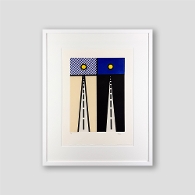
Illustration for "Auto Poésie: en Cavale de Bloomington"
20.000 € | 48cm x 35cm
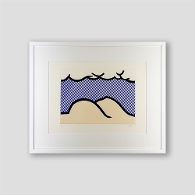
Illustration for "De Denver au Montana, Depart 27 Mai 1972" (I)
20.000 € | 35cm x 48cm
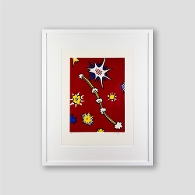
Illustration for "De Denver au Montana, Depart 27 Mai 1972" (II)
20.000 € | 48cm x 35cm
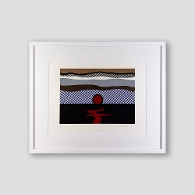
Illustration for "De Nouveau au-dessus de Denver"
20.000 € | 35cm x 48cm
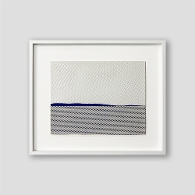
Seascape (1)
20.000 € | 43cm x 57cm